
Bodybuilding: How Do You Know When You’ve Hit True Failure on a Set?
· Updated · John Manzano
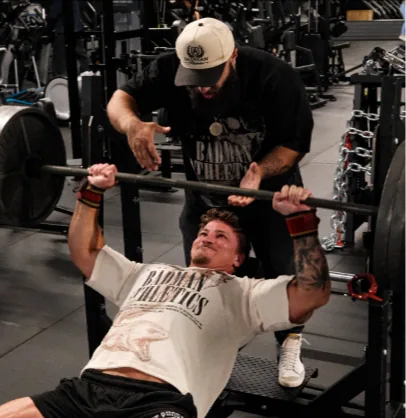
At Athlos Iron Lair in Torrance, California, we’re dedicated to science-backed approaches to strength and hypertrophy training. Whether you’re a seasoned lifter or just starting your journey, one of the most debated concepts in bodybuilding is “training to failure.” But what does true failure really mean, and how can you recognize it during a set? In this post, we’ll dive into the evidence from peer-reviewed studies to help you identify when you’ve truly pushed your muscles to their limit, ensuring safer and more effective workouts.
Training to Failure: The Key to Muscle Growth
Understanding True Muscular Failure
In resistance training, “true failure” – often called momentary muscular failure – refers to the point where your target muscle can no longer produce enough force to complete another repetition with proper form, despite your maximum effort. This is distinct from simply feeling tired or stopping because the set feels hard: your muscles cannot continue.
Peer-reviewed research highlights why this effort matters for hypertrophy (muscle growth). A meta-analysis examining 55 studies found that training closer to failure – leaving 0-5 repetitions in reserve (RIR) – significantly enhances muscle size, as it maximizes muscle fiber recruitment and metabolic stress. However, for strength gains, proximity to failure has little impact; stopping 3-5 reps short can be just as effective while reducing injury risk.
Another study on trained individuals compared training to failure versus stopping short and showed similar increases in muscle cross-sectional area (13.5% vs. 18.1%) and strength (around 22-33% across exercises), suggesting that failure isn’t always necessary but can be a tool for optimization.
Muscle Fatigue vs. True Failure: Know the Difference
It’s easy to confuse muscle fatigue with true failure, but they’re not the same. Muscle fatigue is that burning, heavy sensation where your brain tells you to stop, even though your muscle could squeeze out one or two more reps if pushed. True failure, on the other hand, is a biomechanical endpoint – your muscle is physically incapable of completing the rep due to anaerobic failure.
As explained in fitness science resources, fatigue often precedes failure, but pushing past it is what leads to those deeper adaptations for growth. Training to failure stresses one’s muscles to adapt and grow stronger, but it demands awareness to avoid overdoing it.
Signs You’ve Hit True Failure
Recognizing true failure requires tuning into your body’s signals. Here are key indicators, grounded in training physiology:
-
Inability to Complete the Rep Through Full Range of Motion (ROM): If you can’t finish the concentric phase (e.g., pressing the weight up) without altering form or “cheating,” you’ve likely reached failure. This is technical failure, which is the most recognizable sign of true failure.
-
Significant Slowing of Rep Speed: Your reps grind to a halt, even with max effort. The muscle simply can’t generate force quickly enough.
-
Intense Burning and Shaking: A deep lactic acid burn in the target muscle, often accompanied by visible trembling and/or choppiness in the reps. This signals metabolic fatigue leading to failure.
-
Facial Grimace and Post-Set Weakness: Your face might contort from the effort, and the muscle may feel temporarily “dead” – hard to move or contract right after the set.
-
Mental Barrier Overcome: You push through the urge to quit, but the muscle still gives out. This is absolute or muscular failure, where even poor form can’t save the rep.
Remember, true failure should align with technical safety. Pushing to absolute failure (ignoring form) increases injury risk, so prioritize controlled reps.
The Science Behind Training to Failure
Current research supports incorporating failure strategically for hypertrophy. The FAU meta-analysis emphasizes that for muscle growth, getting within 0-5 RIR per set is optimal, as it recruits more high-threshold motor units and promotes anabolic signaling. Yet, studies like the one on leg press and extensions show non-failure training can yield comparable results, especially in trained lifters, by allowing higher overall volume without excessive fatigue.
Pros of hitting failure include better mind-muscle connection and potential for greater gains in visible muscle. Cons? It demands longer recovery, risks overtraining, and can strain joints if overused. For most, a mix – failing on the last set of isolation exercises but stopping short on compounds – strikes the best balance.
Tips For Reaching Failure
Try this next time you’re at The Lair:
-
Track Your RIR: Estimate reps left in the tank. Aim for 0-2 RIR on hypertrophy-focused sets.
-
Practice Failure: Intensifiers are a great way to learn just how far your body can go; speak with one of our trainers to learn different intensity methods.
-
Use a Spotter: For heavy compounds like bench presses, have a partner to ensure safety. Our staff is always happy to spot our members when the need arises.
-
Listen to Your Body: If form slips early, it’s not true failure – reduce weight next time.
-
Periodize It: Don’t fail every set, every workout. Cycle it in to avoid burning out.
By mastering these cues, you’ll optimize your training for maximum results.
Wrapping Up: Elevate Your Training at Athlos Iron Lair
Knowing when you’ve hit true failure is a game-changer for building muscle efficiently and safely—and it’s even easier to apply consistently when you’re training in the right environment (see membership types). At our Torrance gym, we guide members through innovative, evidence-based techniques to maximize hypertrophy. Ready to push your limits? Enquire how we can guide you in your fitness journey – Follow us on Instagram: @athlosironlair | Visit us at https://www.ironlairgym.com | Stop by for a session | work with one of our trainers towards a specific fitness goal – let’s build strength grounded in science together!
The Importance of Recovery
Recovery is just as crucial as the training itself. After pushing your muscles to their limits, they need time to repair and grow. Incorporating rest days and proper nutrition can significantly enhance your progress.
Nutrition for Muscle Recovery
Fueling your body with the right nutrients is essential. Focus on protein-rich foods to aid muscle repair. Carbohydrates can help replenish glycogen stores, while healthy fats support overall health. Hydration is also vital; drink plenty of water before, during, and after your workouts.
Sleep: The Unsung Hero
Never underestimate the power of sleep. Quality rest is when your body does most of its healing and growth. Aim for 7-9 hours of sleep each night to optimize recovery and performance.
Conclusion: Your Path to Success
Training to failure is a powerful tool when used correctly. By understanding true failure and its implications, you can enhance your workouts and achieve your fitness goals. Remember, it’s not just about lifting weights; it’s about lifting smart. Embrace the journey, and let’s achieve greatness together at Athlos Iron Lair!